Reverse "Information Overload": Schedule "Brain Breaks" for a Supercharged Day
The Modern Struggle: Drowning in Data
We live in an age of unprecedented access to information. While this can be incredibly empowering, it also presents a significant challenge: information overload. Our brains are constantly bombarded with news, emails, social media updates, and notifications, leaving us feeling overwhelmed, stressed, and unable to focus. This constant influx of data can lead to decreased productivity, impaired decision-making, and even burnout. But there's a solution – strategically incorporating "brain breaks" into your daily routine.
Think of your brain like a muscle. Just as physical exercise requires rest and recovery, mental exertion demands periods of respite. Ignoring this need can lead to mental fatigue, hindering your ability to process information effectively. By consciously scheduling short breaks throughout the day, you allow your brain to recharge, leading to improved focus, creativity, and overall well-being.
This isn't about laziness or slacking off; it's about optimizing your cognitive performance. It's about working smarter, not harder. By proactively managing your mental energy, you can transform your workday from a draining slog into a series of focused, productive bursts.

What Exactly is a "Brain Break"?
A brain break is a short, intentional pause from mentally demanding tasks. It's a chance to step away from your work, disengage from screens, and engage in an activity that allows your mind to rest and recover. The key is to choose activities that are different from your usual work and that don't require significant cognitive effort. Think of it as a mental palate cleanser – something that clears your mind and prepares you for the next task.
The length of a brain break can vary depending on your needs and preferences. Some people find that a 5-minute break every hour is sufficient, while others prefer a longer 15-20 minute break every few hours. Experiment to find what works best for you. The important thing is to be consistent and to make brain breaks a regular part of your routine.
Here are some key characteristics of an effective brain break:
- Short duration: Typically 5-20 minutes.
- Intentional: Scheduled and planned, not just spontaneous.
- Disconnect from work: Avoid checking emails or thinking about work-related tasks.
- Engage in a different activity: Choose something that is physically or mentally different from your work.
- Relaxing and enjoyable: The break should be something you look forward to and that helps you feel refreshed.

The Science Behind the Break: Why They Work
The effectiveness of brain breaks is supported by neuroscience. When we engage in demanding cognitive tasks, our brains consume a significant amount of energy. Prolonged mental exertion can lead to a depletion of neurotransmitters and a buildup of metabolic waste products, resulting in mental fatigue. Brain breaks allow the brain to replenish its resources and clear out the waste products, improving cognitive function.
Specifically, brain breaks can help to:
- Restore attention: Stepping away from a task allows your attentional resources to replenish, making it easier to focus when you return.
- Reduce stress: Engaging in relaxing activities during breaks can lower cortisol levels and reduce feelings of stress and anxiety.
- Improve creativity: Taking breaks can allow your subconscious mind to work on problems and generate new ideas.
- Enhance memory: Short breaks can help consolidate memories and improve recall.
Studies have shown that incorporating breaks into the workday can lead to significant improvements in productivity, creativity, and overall well-being. For example, research on the Pomodoro Technique, a time management method that involves working in focused 25-minute intervals with short breaks in between, has demonstrated its effectiveness in boosting productivity and reducing mental fatigue.

Brain Break Ideas: Tailoring to Your Needs
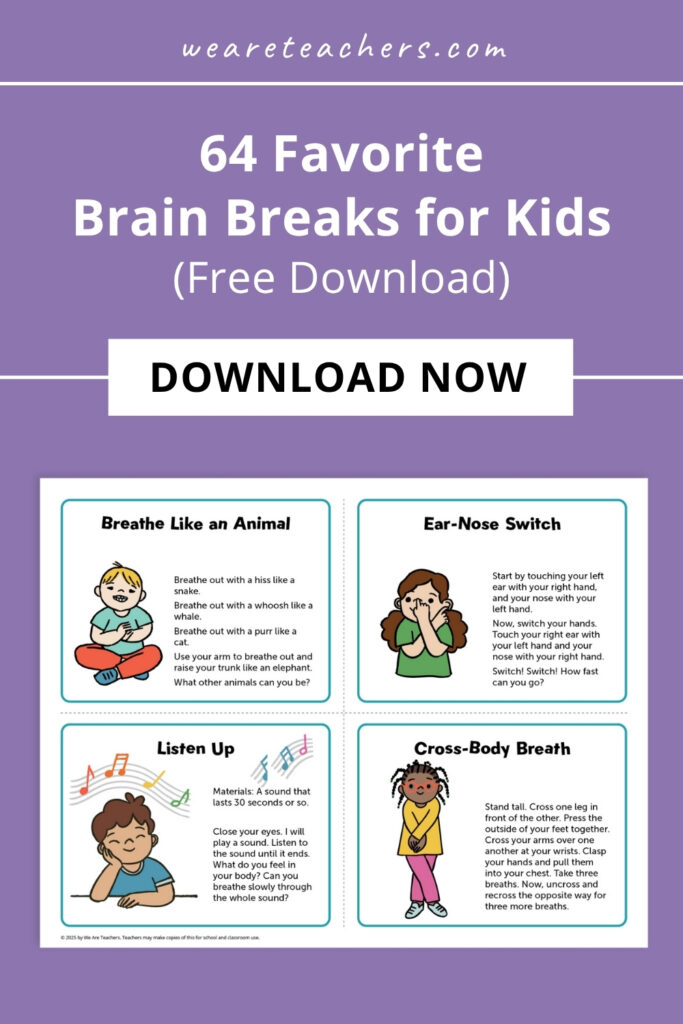
The best brain break activities are those that you find enjoyable and that help you to relax and recharge. Here are some ideas to get you started:
- Physical activity: Take a short walk, do some stretching, or climb the stairs. Physical activity increases blood flow to the brain, which can improve cognitive function.
- Mindfulness and meditation: Practice deep breathing exercises, meditate for a few minutes using apps like Headspace or Calm, or simply focus on your senses.
- Creative activities: Doodle, draw, write in a journal, or play a musical instrument.
- Social interaction: Chat with a colleague, call a friend, or spend time with family.
- Nature exposure: Step outside and enjoy the fresh air, look at trees, or listen to birdsong. Even a brief exposure to nature can have a restorative effect.
- Listen to music: Put on your favorite tunes and let the music wash over you.
- Read a book: Escape into a good book for a few minutes.
- Play a game: Engage in a quick game of solitaire or a puzzle.
The key is to experiment and find what works best for you. Don't be afraid to try different activities until you find a few that you enjoy and that help you to feel refreshed. Also, consider the environment. If you're in a noisy office, noise-canceling headphones might be essential for a truly restorative break.
Scheduling Your Sanity: Implementing Brain Breaks
The most effective way to incorporate brain breaks into your routine is to schedule them in advance. Treat them like important appointments that you can't miss. Use a calendar or task management app like Todoist or Google Calendar to block out specific times for your breaks. This will help you to stay consistent and avoid the temptation to skip them when you're busy.
Here's a sample schedule:
| Time | Activity |
|---|---|
| 9:30 AM | 5-minute stretch break |
| 11:00 AM | 10-minute walk outside |
| 1:00 PM | 15-minute meditation |
| 3:00 PM | 5-minute chat with a colleague |
Be flexible and adjust your schedule as needed. If you find that you need more frequent or longer breaks, don't hesitate to make changes. The goal is to create a routine that works for you and that helps you to stay focused and productive throughout the day.

Overcoming Obstacles: Common Challenges and Solutions
Even with the best intentions, it can be challenging to consistently incorporate brain breaks into your routine. Here are some common obstacles and solutions:
- Feeling too busy: Remind yourself that taking breaks will ultimately make you more productive, not less. Even a short 5-minute break can make a big difference.
- Feeling guilty: Recognize that taking breaks is not a sign of weakness or laziness. It's a necessary part of maintaining your mental health and productivity.
- Distractions: Find a quiet place where you won't be interrupted during your breaks. Turn off notifications and let others know that you're taking a break.
- Forgetting to take breaks: Set reminders on your phone or computer to remind you to take breaks.
- Difficulty disconnecting: If you find it hard to disconnect from work during your breaks, try using a dedicated break app like Cold Turkey Blocker or Freedom to block distracting websites and apps.
Remember that consistency is key. The more you practice taking brain breaks, the easier it will become. And the more you'll experience the benefits of a refreshed and focused mind.

The Supercharged You: Reaping the Rewards
By intentionally scheduling brain breaks into your day, you're not just taking a pause; you're actively investing in your cognitive well-being and unlocking a supercharged version of yourself. The benefits extend far beyond simply feeling less stressed. You'll experience:
- Increased focus and concentration: Replenished attentional resources allow you to stay on task for longer periods.
- Improved productivity: Working in focused bursts with regular breaks leads to more efficient output.
- Enhanced creativity: A relaxed mind is more open to new ideas and innovative solutions.
- Reduced stress and burnout: Regular breaks help to manage stress levels and prevent mental exhaustion.
- Better decision-making: A clear and focused mind allows you to make more informed and effective decisions.
- Increased overall well-being: Prioritizing your mental health leads to a happier and healthier life.
So, take a deep breath, step away from your screen, and embrace the power of the brain break. Your mind (and your productivity) will thank you for it!
Start small, be consistent, and discover the transformative impact of strategic rest. It's time to supercharge your day, one brain break at a time.

So, go ahead and sprinkle in those brain breaks and watch your day (and your mind!) truly flourish.
-YourDad


Comments
Post a Comment